Linguistic security
How language itself becomes an attack surface: polyglot prompt injection, code-switching (Spanglish, Arabizi) and dialect gaps in AI guardrails.
Your choices are remembered on this device.

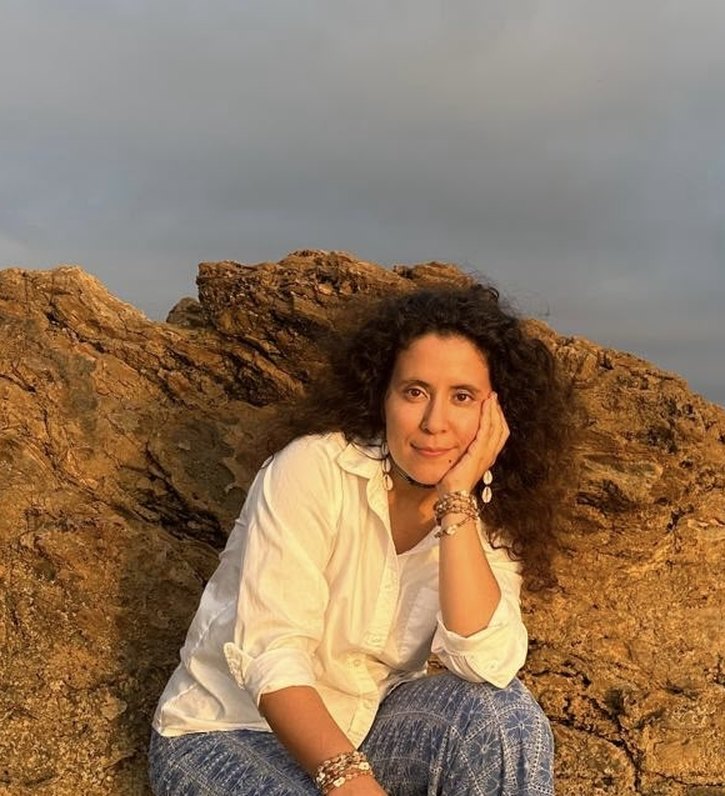
Hello, I'm
Computational linguist · AI security and governance · Founder, Linguistic Security Institute
"Language is inheritance for communities, infrastructure for policy, and evidence for science. Systems should serve all three."
A linguist building systems that are secure, accountable, and educational for the communities they serve. Founder of the Linguistic Security Institute — an open-source research initiative built on one principle: AI systems must be accountable to the communities whose languages they process.
Areas of work
My work asks not only whether a system works, but for whom it works, whom it fails, and who gets to decide — across computational linguistics, cybersecurity, AI governance, conservation and space policy.
How language itself becomes an attack surface: polyglot prompt injection, code-switching (Spanglish, Arabizi) and dialect gaps in AI guardrails.
Risk assessment frameworks and accountability protocols for language integrity across the AI lifecycle.
Community consent and control over data about their languages, lands and knowledge — from archives to Earth observation.
LLM evaluation, error analysis and golden-label quality for Arabic, Spanish and dialectal variation.
Tools for low-resource and endangered languages, like Mitote, a Nahuatl-aware text-to-speech prototype.
Data ethics for geoscience and conservation, and long-horizon thinking for responsible space-debris prioritization.
Collaborations
Conference talks and hands-on red-teaming workshops on linguistic attacks in AI, data sovereignty and language technology.
Invite me to speak →Arabic NLP, multilingual benchmarking, bias auditing and error analysis across large language models.
See research →Golden-label sets, QA frameworks and annotation guidelines for multilingual LLMs and voice AI.
See experience →LSI builds the frameworks, tools and conversations that hold AI accountable to the communities whose languages it processes.
Join LSI →On the horizon
On the intersection of language, security and equity.
Parallels between human-language AI and non-human data ethics for space and conservation communities.
Featured the Linguistic Firewall demo, examining vulnerabilities and defensive frameworks.
Hackathon contribution solving Challenge 2, presented via public showcase video.
A proposed framework for Indigenous data sovereignty in geoscience and education.
How human traditions of listening and carrying memory can inform what we build.
Pre-recorded virtual workshop plus a Saturday in-person, hands-on session.
Demos
Working prototypes from the Linguistic Security Institute, open on GitHub.
A prototype that probes LLM guardrails for "polyglot poisoning": using dialects, scripts and code-switching to slip past safety filters tuned mostly for English.
Responsible disclosure: full attack prompts are shared only with verified researchers working on defenses.
A decision tool for choosing which space-debris objects to take responsibility for first, built on seven questions grounded in the Lakota principles shared through the challenge.
Community & media
LSI publishes across three channels — video, writing, and open models — each aimed at making linguistic security research accessible and actionable for the communities it serves.
Interviews, live workshops, red-team demos and visual explainers — making AI security and linguistic rights legible for everyone, not just practitioners.
Watch on YouTube →Written interviews, research articles and community resources on linguistic security, AI governance and language rights — published here and on Substack.
Read the blog →LSI's open-source models, datasets and evaluation benchmarks for multilingual NLP — Arabic, Spanish and low-resource language research, free to use and build on.
Explore on Hugging Face →Writing
I write about linguistic security, AI governance, and what technology owes the voices it learns from. Subscribe for occasional research updates and invitations to dialogue.
Read the blog →